Peter Helped me with a case these last few months. Always explained everything in depth. Can’t say enough good things about how it went.

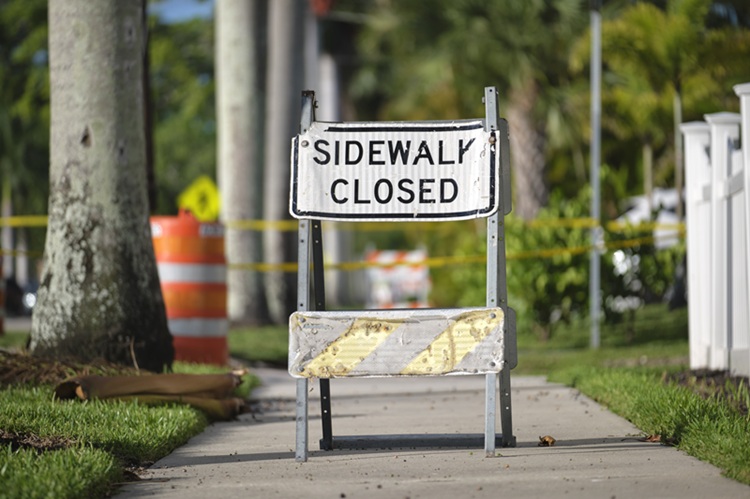


Falling on a cracked city sidewalk, an unlit stairwell in a public building, or a poorly maintained park path raises an immediate question: Who is responsible? If this had happened on private property, you would know to look at the property owner. When the ground you fell on belongs to the city, a county, or another government entity, the legal path forward is different. Not impossible, but different in ways that matter a great deal.
At Bruntrager & Billings, we field this question regularly. The short answer is yes, you can sometimes file a public property injury claim under Missouri law, but the rules that apply are stricter, the deadlines are shorter, and the process is less forgiving of errors than a standard slip and fall case. Here is what those rules actually look like.

Before you can understand how to bring a claim against a city, you need to know about a doctrine called sovereign immunity. Historically, governments could not be sued at all. That protection still exists in Missouri, but the state has carved out specific exceptions through the Missouri Sovereign Immunity Act, codified at Mo. Rev. Stat. § 537.600.
That statute does something important for injured people: it waives sovereign immunity in situations involving dangerous conditions of public property. When a government entity owns or maintains property that contains a hazardous condition and fails to address it, the immunity that would otherwise shield it from liability may not apply.
Under § 537.600, sovereign immunity is waived in two specific situations:
For claims involving falls on government property, the second exception is usually the most important.
The term “dangerous condition” is not defined in the broadest possible sense. For a hazard to qualify, it must be more than a minor imperfection. It must pose a real and foreseeable risk to people using the property.
Courts in Missouri have applied the dangerous condition standard to situations including:
A slip and fall claim against a government entity also requires showing that the agency knew, or reasonably should have known, about the dangerous condition before the injury occurred. There are two ways to establish that:
Prior complaints are often the most powerful evidence in these cases. If a St. Louis resident submitted a 311 request about a broken sidewalk three months before you tripped on it and nothing was done, that record becomes directly relevant to your claim.
This is where filing a claim against the State of Missouri or the City of St. Louis gets significantly harder than a standard premises liability case, and where many otherwise valid claims are permanently lost.
Before you can file a lawsuit against a city or other government entity in Missouri, you are typically required to file a formal notice of claim for a Missouri injury within a specific window of time. This is a written notification to the government entity informing them that you were injured on their property and that you intend to pursue compensation. It is a procedural step that must happen before any lawsuit is filed.
The filing requirements are not uniform across all government bodies in Missouri:
For many municipalities, the window is 90 days from the date of injury. Identifying which entity actually owns and maintains the property where you fell is part of the work, and getting that wrong can send your notice to the wrong place entirely.

Missouri’s general personal injury statute of limitations under Mo. Rev. Stat. § 516.120 gives most injury victims five years to file a lawsuit. The notice of claim requirement does not replace that deadline; it adds to it. You can be within the five-year window and still lose your right to sue a government entity because the 90-day notice period passed without action. This is the most common reason valid municipal liability slip and fall claims never make it to court.
Under standard slip and fall laws, private property owners are required to keep their premises in reasonably safe condition and warn visitors of known hazards. The basic legal concept is similar, but cases involving falls on government property have different proof requirements, notice rules, and damages limitations.
On the damages side, Mo. Rev. Stat. § 537.610 limits government liability to the amount of insurance coverage the entity has purchased. A government entity without applicable insurance coverage may have significantly narrowed exposure, which affects what recovery is realistically possible. This is not a reason to avoid pursuing a claim, but it is a reason to investigate coverage early.
On the proof side, government defendants in public property slip and fall cases in Missouri frequently argue that:
These are the same defenses you see in private cases, but they tend to be litigated more aggressively when a government entity’s legal team is involved.
Can you sue the city for a fall in Missouri? In St. Louis, the most common public property settings for these claims include:

Falling on government property does not automatically make your case unwinnable, but it does make it more time-sensitive and more procedurally demanding than most people expect. The combination of sovereign immunity rules, the notice of claim requirement, and the proof standards for dangerous conditions means that government property slip and fall cases reward preparation and punish delay.
If this sounds like what you are dealing with, the team at Bruntrager & Billings may be able to help you figure out whether you have a viable claim and what steps need to happen right away. Free consultations are available with no obligation.
Contact us to talk through what happened and find out where you stand.