Peter Helped me with a case these last few months. Always explained everything in depth. Can’t say enough good things about how it went.


If you were just in a motorcycle crash and you are trying to figure out what happens next, the process can feel completely foreign, especially while you are dealing with pain, a totaled bike, and a phone that will not stop ringing. Motorcycle accident claims in Missouri follow a specific path, and what you do in the first days and weeks after a crash can have a direct effect on what you ultimately recover.
You need to know how motorcycle accident claims work in Missouri, what to expect from the insurance side, and where the process can go sideways.
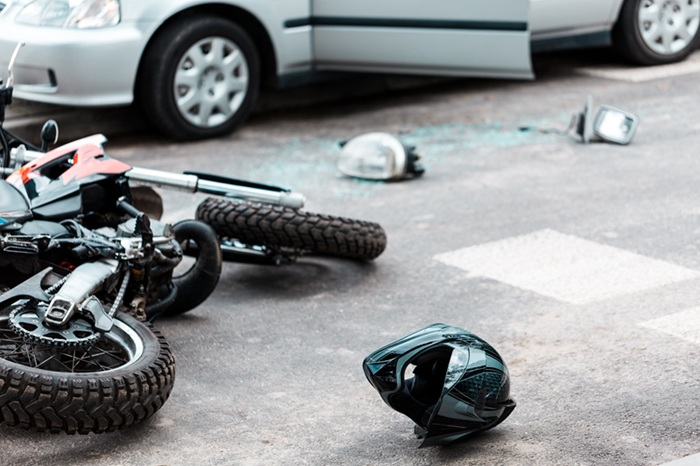
Most people think the claims process begins when they call an insurance company. In practice, it starts at the scene. The decisions made immediately after a crash, whether to call police, what to say, what to photograph, and what medical care to seek, shape the entire trajectory of a claim.
A police report is one of the most important pieces of evidence in a Missouri motorcycle accident case. It establishes an official record of where the crash happened, who was involved, and, in many cases, includes the responding officer’s assessment of how the accident occurred. Crashes on roads like Kingshighway, Natural Bridge Road, Manchester Road, and Watson Road are handled by different departments depending on whether the incident falls within St. Louis City limits or St. Louis County jurisdiction. Knowing which department filed the report matters when you go to request it.
One thing that makes Missouri motorcycle accident law cases different from standard car accident claims is the assumption that follows riders into the process. Insurance adjusters often approach motorcycle claims with a preset narrative: the rider was going too fast, weaving through traffic, or taking risks that a reasonable person would not take.
This bias is not grounded in data. The majority of multi-vehicle motorcycle crashes are caused when other drivers fail to see or yield to riders, according to the National Highway Traffic Safety Administration. Riders traveling through busy St. Louis corridors like Hampton Avenue, South Grand, Gravois Avenue, and Jefferson Avenue deal with left-turning drivers, distracted commuters, and vehicles pulling out of parking lots at all hours, creating real danger regardless of how carefully the rider is operating.
Despite the data, that assumption gets used strategically at nearly every stage:
The practical effect is that riders frequently get lowball offers in the early stages of a claim, particularly before an attorney is involved. Knowing that bias exists and that it will be part of the process is the first step to not letting it dictate your outcome.

Missouri follows a pure comparative fault system under Mo. Rev. Stat. § 537.765. This means that even if you were partially at fault for the crash, you can still recover compensation. Your total damages are reduced by your percentage of fault.
Insurance companies use the comparative fault system as a lever. If they can get you to say something in a recorded statement that suggests you were speeding, following too closely, or not paying full attention, they can argue you were 30 percent, 40 percent, or 50 percent at fault. Each percentage point directly reduces what they owe you.
This is one of the main reasons attorneys consistently advise against giving recorded statements to the other driver’s insurer before getting legal guidance. A few things worth knowing:
Your own insurer is a different matter. Your policy likely requires you to cooperate with your own company’s investigation. That is a separate obligation from speaking with the at-fault driver’s insurer.
Filing a motorcycle accident claim in Missouri involves more moving parts than most people expect. Here is how the process typically unfolds:
You are required to notify your own insurance company of the accident, typically within a timeframe set by your policy. This is not the same as giving a recorded statement or accepting any fault. It is simply reporting that an accident occurred. The at-fault driver’s insurer is a separate contact and a separate process.

After a claim is opened, the at-fault driver’s insurance company will conduct its own investigation. This includes reviewing the police report, inspecting vehicle damage, and often requesting a recorded statement from you.
Once your medical treatment is complete or has reached a stable point, your attorney will typically prepare a formal demand package. This is a documented presentation of your injuries, your treatment history, your financial losses, and the legal basis for holding their insured responsible.
The insurer responds to the demand with a counteroffer, which is almost always lower than the demand. Negotiations go back and forth from there. The gap between opening positions can be significant in motorcycle cases because of the severity of injuries and the insurer’s early attempts to minimize fault.
A motorcycle accident insurance claim in Missouri is processed through the same general structure as any other vehicle accident claim, but the way insurers approach it internally tends to differ in meaningful ways.
Motorcycle injuries are typically more severe than car accident injuries, which means the potential payout for the insurer is higher. Higher exposure means more resources assigned to defending the claim. Insurers are more likely to bring in their own accident reconstruction analysts or independent medical reviewers before agreeing to any number. Cases involving serious injuries at locations like Page Avenue, Telegraph Road, or the interchange at Lindell Boulevard and Kingshighway, where multi-lane traffic and turning vehicles create frequent conflicts with riders, are not treated as routine files.
Under Mo. Rev. Stat. § 302.020, Missouri requires helmet use for motorcycle riders. If you were not wearing one, expect the insurer to argue that your head, neck, or brain injuries were worsened as a result and use that to reduce their offer. For injuries that have nothing to do with head protection, that argument does not hold up, but it gets raised regardless and needs to be addressed directly.
Social media is another tool insurers use more aggressively in motorcycle cases. Posts showing you on a bike, riding quickly, or performing any kind of maneuver can be used to build a narrative about your riding habits. It is worth being careful about what you post publicly during an open claim.
Most motorcycle accident claims in Missouri resolve through settlement before a lawsuit is ever filed. But not all of them should, and the threat of litigation is part of what keeps insurers from offering the lowest possible number indefinitely.
A lawsuit becomes the appropriate path when:
Filing a lawsuit does not mean going to trial. The majority of cases that enter litigation still settle before reaching a courtroom, often because the filing itself signals that the attorney on the other side is prepared to take it all the way. Cases that settle after a lawsuit is filed frequently settle for more than pre-suit offers because the insurer’s litigation costs are now real.
Missouri gives personal injury victims five years to file a lawsuit under Mo. Rev. Stat. § 516.120. That window sounds long. In practice, the cases that reach the best outcomes are the ones where a St. Louis motorcycle accident attorney got involved early, evidence was preserved before it disappeared, and the claim was built on a solid foundation from the start.
If you are still sorting out what happened and what your options are, or wondering how to get a motorcycle accident settlement in Missouri, Bruntrager & Billings offers free consultations for motorcycle accident victims in the St. Louis area. There is no obligation, and it costs nothing to get a clear picture of where your claim stands. Contact us today to talk through your situation.