




Peter Helped me with a case these last few months. Always explained everything in depth. Can’t say enough good things about how it went.
Facing criminal charges in St. Louis, whether in state court or federal court, triggers a process that moves quickly and carries serious consequences. The system is designed to favor those who are prepared, and prosecutors on both the state and federal sides are experienced, well-resourced, and rarely slow to act.
Having legal representation that understands how these two systems operate, how they differ, and what defense strategies are available in each is not a luxury at this stage. It is the foundation of any realistic path to a favorable outcome.
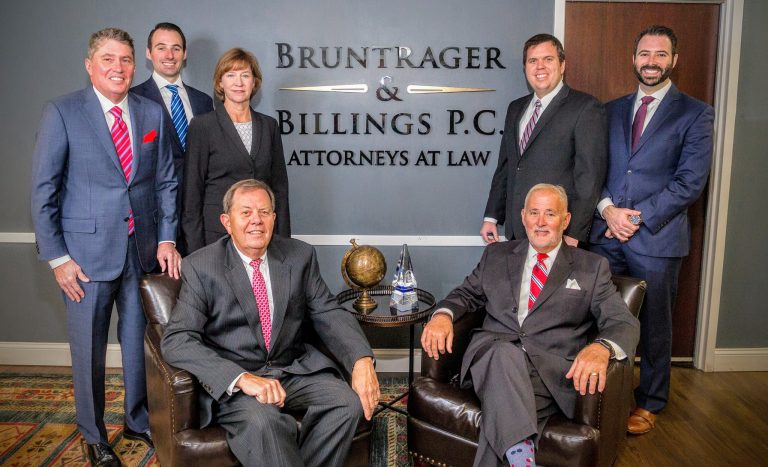
Bruntrager & Billings, P.C. has represented clients in St. Louis criminal matters at both the state and federal levels since 1954. The firm’s attorneys are former prosecutors who spent their early careers building cases inside the system they now defend against. That experience informs every aspect of how the firm approaches criminal defense, from the investigation stage through trial and, when necessary, sentencing and appeal.
The firm appears regularly in the U.S. District Court for the Eastern District of Missouri, as well as in Missouri Circuit Courts throughout the St. Louis metropolitan area.
Facing Federal Charges or a State Felony?
The decisions you make now can affect the course of your entire case.
Federal Court and State Court: How They Differ for St. Louis Defendants
The distinction between a federal case and a state case is not merely administrative. The two systems operate under different rules of procedure, different sentencing frameworks, and different standards that influence defense strategy from the first day of representation. Understanding those differences is essential context for anyone facing charges in either forum.
Where the Cases Are Heard
State criminal cases in St. Louis are handled in the Missouri Circuit Courts, including St. Louis City Circuit Court and St. Louis County Circuit Court, prosecuted by the Circuit Attorney’s Office or the St. Louis County Prosecuting Attorney’s Office.
Federal criminal cases originating in the St. Louis area are heard at the Thomas F. Eagleton U.S. Courthouse, located at 111 South 10th Street in downtown St. Louis, and are prosecuted by Assistant U.S. Attorneys from the U.S. Attorney’s Office for the Eastern District of Missouri.
The procedural rules, bond processes, discovery obligations, and courtroom dynamics differ substantially between the two settings.

Who Investigates and Prosecutes
State charges are typically investigated by local law enforcement, including the St. Louis Metropolitan Police Department, the St. Louis County Police Department, or the Missouri State Highway Patrol. Federal charges are investigated by federal agencies, including the FBI, DEA, ATF, IRS Criminal Investigation Division, or the Department of Homeland Security, often after months or years of surveillance, undercover work, or grand jury proceedings conducted without the defendant’s knowledge.
Federal prosecutors have significant institutional resources for every case and tend to file charges only after they believe the investigation is complete.
A Critical Difference in Sentencing
Sentencing is one of the most significant practical distinctions between the two systems. Missouri state felonies are classified into five tiers under RSMo Chapter 558, ranging from Class E felonies carrying up to four years to Class A felonies carrying ten to thirty years or life. Missouri state courts have sentencing guidelines that are advisory rather than mandatory, and judges retain meaningful discretion. State defendants may also be eligible for parole after serving a portion of their sentence.
Federal sentencing operates differently and tends to produce longer actual time served. The U.S. Sentencing Guidelines calculate an offense level based on the nature of the conduct, the amount of loss or quantity of drugs involved, the defendant’s criminal history, and other specific offense characteristics.
When Both Systems Apply
Some conduct violates both Missouri law and federal law simultaneously, creating what prosecutors call concurrent jurisdiction. A drug trafficking case that crosses state lines, a firearms offense that triggers both state and federal statutes, or a fraud scheme that implicates both Missouri criminal law and a federal statute can result in dual prosecution. The federal government may take the lead, or both proceedings may run in parallel.
In practice, the federal case often has the more severe potential sentencing. An attorney experienced in both state and federal courts in St. Louis can assess how each system is likely to approach the matter and advise on the strategic implications.
Received a Target Letter or Grand Jury Subpoena?
Get experienced legal guidance before speaking with investigators.
How Federal Criminal Cases Begin: Investigations, Grand Juries, and Indictments
Federal cases rarely begin at the moment of arrest. By the time charges are filed, federal agents have typically been investigating for months or longer. The first indication that a federal investigation is underway may be a subpoena for documents, a call from an FBI agent requesting an interview, the execution of a search warrant, or a target letter from the U.S. Attorney’s Office. Each of these signals requires immediate legal attention.
Grand Jury Investigations
Most federal felony charges in the Eastern District of Missouri are brought by grand jury indictment. A federal grand jury is a closed proceeding in which an Assistant U.S. Attorney presents evidence to a panel of citizens who determine whether probable cause exists to bring charges. The target of a grand jury investigation does not have a right to appear or to present a defense at this stage.
The Federal Indictment
A federal indictment is the formal document returned by the grand jury that initiates the criminal case. It specifies the charges and the statutory basis for each count. Receiving a federal indictment, or learning through counsel that an indictment has been returned under seal, marks the beginning of a tightly scheduled process.
Arraignment at the Eagleton Courthouse typically follows quickly. Bond hearings in federal court differ from state bond proceedings; the government may seek pretrial detention on the basis of flight risk or danger to the community, and the standards for release are often more demanding than in state court.
Why Early Intervention Matters
Federal investigations are built over time, and the decisions made before charges are filed, including what documents are preserved, what statements are made to investigators, and whether voluntary cooperation with the government makes strategic sense, can significantly affect the outcome of the case.
Retaining a federal indictment attorney in St. Louis during the investigation phase, before charges are brought, allows counsel to engage with the process proactively rather than reactively. In some cases, early intervention can influence whether charges are filed at all.
Missouri State Felony Defense in St. Louis
Missouri classifies felonies into five tiers:
- Class A felonies, which include first-degree murder, first-degree robbery, and first-degree assault, carry ten to thirty years or life
- Class B felonies carry five to fifteen years
- Class C felonies carry three to ten years
- Class D felonies carry up to seven years
- Class E felonies carry up to four years
For defendants with prior felony convictions, Missouri law imposes enhanced sentencing ranges through the prior offender and persistent offender statutes, which can elevate the applicable punishment tier by one full class.
Missouri also imposes specific parole eligibility rules based on criminal history. A defendant with one prior prison stay must serve at least 40% of their sentence before parole eligibility. Two prior incarcerations raise that threshold to 50%, and three or more raise it to 80%. Defendants convicted of dangerous felonies must serve 85% of their sentence before becoming eligible.
Common State Felony Matters
Bruntrager & Billings handles the full range of state felony matters in St. Louis and throughout Missouri, including:
- Violent offenses, including assault, robbery, and weapons charges
- Drug offenses, including possession, distribution, and trafficking
- Property crimes, including burglary, theft, and fraud
- Sex offenses and offenses requiring registration
- DWI and vehicular offenses at the felony level
- Homicide and manslaughter charges
Under Criminal Investigation?
Early intervention can make a meaningful difference before charges are filed.
How Bruntrager & Billings Approaches Criminal Defense at the Federal and State Levels
The attorneys at Bruntrager & Billings approach each matter from the perspective of former prosecutors who know how the government builds its cases and where those cases can be effectively challenged. That institutional knowledge matters throughout the defense process, from evaluating the strength of the government’s evidence to identifying constitutional violations that support suppression motions, to negotiating with prosecutors who know the firm is prepared to go to trial.
Federal investigations often involve allegations of fraud, financial misconduct, healthcare billing issues, or other white collar crimes that may be prosecuted in the U.S. District Court for the Eastern District of Missouri.
Pretrial Motions and Suppression
Many criminal cases, at both the state and federal levels, turn on pretrial motions rather than trial. Motions to suppress evidence obtained through unlawful searches, motions to exclude statements obtained in violation of Miranda rights, challenges to the sufficiency of a warrant, and challenges to identification procedures can substantially limit the government’s case before trial begins.
The attorneys at Bruntrager & Billings review the full investigative record for constitutional violations that support these challenges and file motions when the facts support them.

Plea Negotiations
Not every case should go to trial, and the decision about whether to negotiate a resolution requires an honest assessment of the evidence, the applicable sentencing exposure, and the realistic range of outcomes. Prosecutors negotiate differently with defense counsel whom they know are genuinely prepared to try a case.
The firm’s trial background gives its attorneys credibility in plea discussions that translates into better negotiated outcomes for clients. When cooperation with the government is an option worth exploring, the firm advises clients on the mechanics, risks, and potential benefits of that path as well.
Trial Representation
When a case should go to trial, Bruntrager & Billings is prepared to try it. The firm’s attorneys have spent decades in Missouri courtrooms and in the federal courts of the Eastern District. They know how to present complex factual records clearly to a jury, how to cross-examine government witnesses and agents effectively, and how to challenge forensic and technical evidence.
Frequently Asked Questions About Federal and State Criminal Cases in St. Louis
A target letter is a written notification from the U.S. Attorney’s Office indicating that the recipient is a target of a federal grand jury investigation, meaning prosecutors believe there is substantial evidence that the person committed a federal crime. Receiving a target letter does not mean charges have been filed, but it signals that the investigation is at an advanced stage.
The appropriate response is to retain a federal criminal defense attorney in St. Louis immediately and to avoid making any statements to investigators without counsel present.
Yes. The U.S. Supreme Court’s dual sovereignty doctrine permits separate prosecutions by state and federal governments for the same underlying conduct without violating the Double Jeopardy Clause. In practice, prosecutors often coordinate so that one jurisdiction takes the lead, but there is no legal bar to parallel proceedings. Defendants in this situation face potential sentencing exposure in both systems and need counsel who understands how each case is likely to develop.
You are not required to speak with federal agents, and doing so without an attorney present carries significant risk. Statements made to federal investigators, even if intended to be cooperative, can be used against you or form the basis of additional charges for false statements under 18 U.S.C. Section 1001. The safest course is to politely decline to speak without an attorney and to contact a federal and state criminal defense attorney in St. Louis as soon as possible.
Representing St. Louis Defendants in Federal and State Court Since 1954
Bruntrager & Billings has built its reputation on trial experience and direct client involvement across seven decades of practice in St. Louis. When the stakes are this high, experience in the specific courts and systems where your case will be decided matters.
If you or a family member is facing federal charges, a state felony, a grand jury investigation, or any serious criminal matter in the St. Louis area, the team at Bruntrager & Billings, P.C. may be able to help. Do not wait to contact our office to get started.