




Peter Helped me with a case these last few months. Always explained everything in depth. Can’t say enough good things about how it went.
A federal investigation into financial misconduct is one of the most serious legal situations an individual or business can face. Federal agencies invest significant resources in building white collar cases, and by the time charges are filed, prosecutors have often spent months or years gathering evidence. Whether you are a business owner, executive, financial professional, or healthcare provider who has received a target letter, grand jury subpoena, or search warrant, securing representation from an experienced white collar crime attorney in St. Louis should be the immediate priority.
Bruntrager & Billings, P.C. represents individuals and organizations facing federal and state financial crime charges throughout Missouri, with the litigation depth that these matters demand.
Received a Target Letter or Grand Jury Subpoena?
Early legal representation can make a meaningful difference in the outcome.
What Are White Collar Crimes?
White collar crimes are financially motivated, non-violent offenses typically committed by individuals in positions of trust or professional standing. They are prosecuted at both the state and federal levels, though many of the most serious charges are brought in federal court under statutes administered by the U.S. Department of Justice and investigated by agencies including the FBI, IRS Criminal Investigation Division, the Securities and Exchange Commission, and the Department of Health and Human Services Office of Inspector General.
Because many of these offenses involve electronic communications or transactions that cross state lines, cases originating in St. Louis are frequently prosecuted in the U.S. District Court for the Eastern District of Missouri.
Federal sentencing in white collar cases is governed by the U.S. Sentencing Guidelines, which use a base offense level that increases based on loss amount, number of victims, and other case-specific factors. The financial stakes and sentencing in these cases can be severe, making early and experienced criminal defense representation a practical necessity.
Federal White Collar Charges We Defend in St. Louis

Wire Fraud
Wire fraud under 18 U.S.C. § 1343 is one of the most broadly applied federal statutes in financial crime prosecutions. It reaches any scheme to defraud that uses electronic communications, including phone calls, emails, text messages, or internet transactions, at any point in the alleged scheme. The statute carries a maximum penalty of 20 years per count, rising to 30 years if a financial institution is involved. Because each individual electronic transmission can be charged as a separate count, sentencing exposure in wire fraud cases can accumulate quickly. Prosecutors also frequently stack wire fraud charges alongside other financial crimes charges.
Bank Fraud
Bank fraud under 18 U.S.C. § 1344 covers schemes to defraud a financial institution or to obtain money or property from a bank through false pretenses. Charges arise in contexts including loan fraud, check kiting, mortgage fraud, and account manipulation. The statute carries a maximum of 30 years in federal prison. A bank fraud attorney in St. Louis can help individuals facing these allegations assess the government’s evidence, identify weaknesses in the prosecution’s theory, and build a defense that accounts for the specific conduct alleged.
Securities Fraud
Federal securities fraud under 18 U.S.C. § 1348 and SEC Rule 10b-5 prohibit fraud in connection with securities transactions, including misrepresentations to investors, insider trading, and market manipulation schemes. Securities fraud carries a maximum of 25 years in federal prison. Investigations are frequently initiated by the SEC before criminal referrals are made to the DOJ, which means individuals may be under scrutiny for a significant period before any formal charges are filed. Early intervention by a securities fraud attorney in St. Louis can affect how an investigation develops.

Tax Fraud
Federal tax fraud and tax evasion charges under 26 U.S.C. § 7201 are prosecuted by the Department of Justice Tax Division following referrals from the IRS Criminal Investigation Division. Tax evasion carries a maximum of five years in federal prison and substantial fines. Related charges such as filing a false return under 26 U.S.C. § 7206 carry up to three years. Tax fraud investigations often run for years before a target is aware of them, and they frequently surface in conjunction with other financial crime charges. A tax fraud lawyer in St. Louis with federal court experience can engage with investigators and prosecutors at the right stage to protect a client’s interests.
Healthcare Fraud
Healthcare fraud under 18 U.S.C. § 1347 targets schemes to defraud Medicare, Medicaid, TRICARE, and private insurers through false billing, upcoding, unbundling, or kickback arrangements. A conviction carries up to 10 years in federal prison, rising to 20 years if serious bodily injury results and up to life imprisonment if a patient death is involved. Healthcare providers facing government scrutiny should understand that billing irregularities can trigger investigations even where no intentional fraud occurred. A healthcare fraud defense attorney in St. Louis can help providers respond to subpoenas, OIG inquiries, and False Claims Act investigations before matters reach the indictment stage.
Money Laundering
Money laundering charges under 18 U.S.C. § 1956 are frequently added to white collar prosecutions to extend sentencing exposure and justify asset forfeiture. The statute covers financial transactions conducted with proceeds of specified unlawful activity, including fraud and embezzlement. A money laundering conviction carries up to 20 years in federal prison and fines up to twice the amount laundered. Because money laundering charges are often layered onto underlying fraud allegations, the defense of these counts requires a thorough understanding of the full scope of the government’s theory.
“The right time to contact a white collar defense attorney is before you speak with investigators.”
Embezzlement
Embezzlement charges arise when someone in a position of trust misappropriates funds or property belonging to an employer, organization, or government entity. Federal embezzlement statutes cover a range of contexts, including theft from federally insured financial institutions, misappropriation of government funds, and theft from organizations receiving federal benefits.
State-level embezzlement charges in Missouri can accompany or substitute for federal charges depending on the conduct involved. An embezzlement lawyer in St. Louis needs to understand the evidentiary record thoroughly, since these cases typically turn on records of financial transactions, account access, and authorization.
Financial Crimes and Corporate Fraud
Corporate executives, officers, and board members face heightened scrutiny when financial irregularities emerge within a company. Corporate crime charges may involve accounting fraud, falsification of financial records, obstruction of an SEC investigation, or conspiracy charges that reach multiple individuals within an organization. Federal law treats corporate fraud aggressively, particularly in the post-Sarbanes-Oxley environment. A corporate crime attorney in St. Louis with trial experience can represent individuals within an organization facing personal exposure, as well as businesses navigating parallel civil and criminal proceedings.
Under Investigation for Financial Misconduct?
Get experienced defense counsel before speaking with investigators.
How Federal White Collar Investigations Work
White collar investigations move differently than most criminal cases. Law enforcement agencies often spend months or years building a case before a target has any indication they are under scrutiny. The investigation may begin with a whistleblower complaint, a referral from a regulatory agency, a suspicious activity report from a financial institution, or a lead from another prosecution. Grand jury subpoenas for documents or testimony are frequently the first signal that a formal investigation is underway.

Receiving a target letter from the U.S. Attorney’s Office for the Eastern District of Missouri means prosecutors have identified you as someone they believe committed a federal offense. At that stage, retaining a federal fraud defense lawyer in Missouri is critical. Statements made to investigators without counsel present can be used against you, and early decisions about document preservation, voluntary cooperation, and grand jury responses shape the trajectory of the entire case.
The U.S. Attorney’s Office for the Eastern District of Missouri handles the prosecution of federal white collar cases brought in St. Louis. Investigations may be led by the FBI’s Financial Crimes Unit, the IRS Criminal Investigation Division, the SEC’s enforcement staff, or the HHS Office of Inspector General, often in coordination with each other. Understanding how these agencies operate, how they build cases, and where their theories may be vulnerable requires attorneys who have worked on complex federal matters in this district.
What a White Collar Defense Attorney Does
Effective white collar defense begins well before charges are filed. At the investigation stage, a financial crimes attorney in St. Louis can engage with government investigators to manage document requests, advise on grand jury testimony, and assess whether early resolution is in a client’s interest. Where charges have already been filed, defense counsel must evaluate the government’s evidence, identify legal and factual defenses, and determine whether pretrial motions can limit the scope of prosecution.
Common defense strategies in white collar cases include challenging the government’s proof of intent, disputing the characterization of financial transactions, establishing that representations were made in good faith, and contesting loss calculations under the Federal Sentencing Guidelines. In some cases, cooperation with the government or early resolution through a plea agreement reduces sentencing exposure meaningfully. These are high-stakes decisions that require an honest assessment of the evidence and experienced judgment about how federal courts in this district approach these matters.
Facing Federal Fraud or White Collar Charges?
Protect your rights with attorneys experienced in complex criminal defense matters.
Frequently Asked Questions About White Collar Defense in Missouri
Many white collar offenses can be prosecuted under either federal or state law, and in some cases both. Federal charges typically apply when conduct crosses state lines, involves federal programs or financial institutions, or is investigated by a federal agency. State charges in Missouri may apply to fraud, embezzlement, or financial misconduct that is confined to in-state activity. Federal sentencing tends to be more severe due to the mandatory application of the U.S. Sentencing Guidelines and the absence of parole in the federal system.
The right time is before you speak with investigators. If you have received a grand jury subpoena, a target or subject letter from the U.S. Attorney’s Office, or a request for documents from a federal agency, retaining counsel immediately protects your rights and allows your attorney to engage with the process from the start. Waiting until charges are filed limits your options significantly.
Federal white collar convictions frequently result in prison sentences, particularly in cases involving large loss amounts or multiple victims. The Federal Sentencing Guidelines calculate offense levels based on factors including the dollar amount of the fraud, the number of victims, and whether the defendant was in a position of trust. Sentences in the range of several years are common in significant fraud prosecutions. Mitigating factors, including cooperation, acceptance of responsibility, and the defendant’s background, can reduce sentencing exposure under the guidelines.
A business receiving a grand jury subpoena or a civil investigative demand from a federal agency should immediately retain legal counsel and place a litigation hold on relevant documents. Destroying or altering records after receiving legal process can give rise to obstruction charges that are independent of the underlying conduct. Counsel can help respond to the subpoena appropriately, identify what the government is likely investigating, and advise on whether voluntary cooperation or a proactive approach to the inquiry makes sense given the circumstances.
Many federal white collar cases resolve through plea agreements, deferred prosecution agreements, or non-prosecution agreements, depending on the nature of the conduct and the strength of the government’s evidence. Whether resolution short of trial is appropriate requires a careful assessment of the evidence, the likely outcome at trial, and the sentencing consequences of different outcomes. The attorneys at Bruntrager & Billings evaluate each matter on its specific facts and provide candid guidance on the realistic range of outcomes.
St. Louis White Collar Defense Grounded in Trial Experience
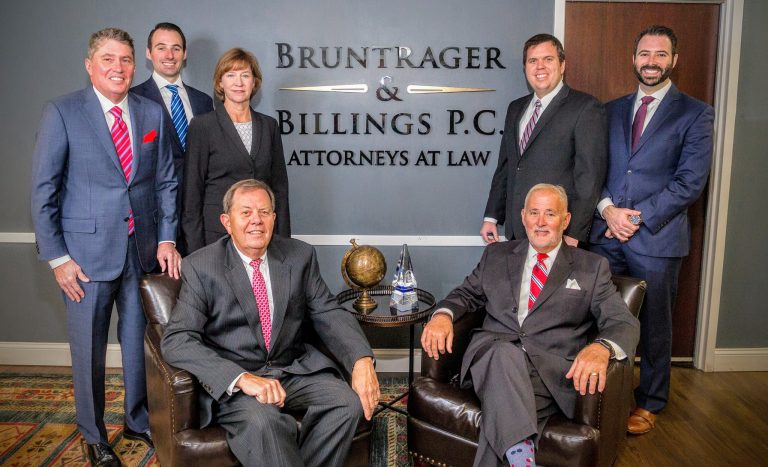
Bruntrager & Billings has represented clients in St. Louis and throughout Missouri since 1954. The firm’s attorneys are former prosecutors who built careers in the courtroom before moving to private practice. That background informs how they approach white collar defense: with an understanding of how federal and state prosecutors build cases and where those cases can be effectively challenged.
The firm’s experience includes representation of governmental entities in the St. Louis region, civil litigation, and complex criminal defense matters in both state and federal court. For individuals and businesses facing federal white collar charges or investigations in Missouri, that combination of prosecutorial experience and litigation depth makes a meaningful difference.
If you or your business is facing a federal investigation, a grand jury subpoena, or white collar charges in Missouri, the team at Bruntrager & Billings, P.C. may be able to help. Contact us today for more information.